Lochristi, Belgium · ocean freight, forwarding and inland distribution
Maritime shipping and supply chain support from Lochristi
Pacific Ocean Shipping & Solutions is a maritime shipping, freight forwarding, and supply chain management company at Raveschoot 22, 9080 Lochristi, Belgium. We work with importers and exporters who move cargo through Belgian ports and on into the European hinterland.
What we do, in plain terms
We book ocean freight, arrange forwarding, prepare customs paperwork, and coordinate inland transport to your warehouse or customer. You get one point of contact instead of four separate suppliers.
That covers a single container from Antwerp to a distribution centre in Limburg, or a recurring flow that arrives in Zeebrugge and has to be split across several countries. If your cargo needs warehousing or temperature control before final delivery, we plan that leg too.
Ocean freight and forwarding
FCL and LCL bookings, consolidation and deconsolidation, and container traffic through Belgian ports. Freight forwarding means we manage the carrier relationship, the booking, and the documents so you are not chasing several parties at once.
Customs and compliance
Import and export documentation, douaneformaliteiten, and Belgian regulatory checks are part of the job, not an afterthought. We prepare the paperwork and flag what your consignment needs before it reaches the port.
Hinterland distribution and warehousing
Belgian ports connect to inland markets by road, rail, and river. After arrival, cargo often needs warehousing, order picking, or a transfer onto barge or rail for the next leg, and we coordinate multimodaal vervoer so the mode fits the deadline.
Sector flows
Chemicals, steel, automotive, food, and temperature-controlled trade each move differently through Belgian ports. If your goods fall into one of these categories, tell us early, because it changes the handling, the paperwork, and sometimes the port.
The right setup depends on the cargo, so start there rather than with a service list. Read the detail on Ocean Freight & Forwarding or Sector Flows.
Before we quote anything
A full container of steel coils and a palletised food consignment need different handling, documentation, and inland routing.
What we ask first
Dimensions, weight, whether the goods are temperature-sensitive, and where they have to be and by when. Those four answers shape the route before price comes into it.
What you get back
A suggested route and a transport mode for your cargo, not a generic package. Shippers who tell us the deadline and the constraint up front usually get a faster, more accurate answer.
What we skip
Long option lists. We compare road, barge, and rail against your deadline and destination, then commit to one plan instead of leaving the choice to you.
Customs and compliance
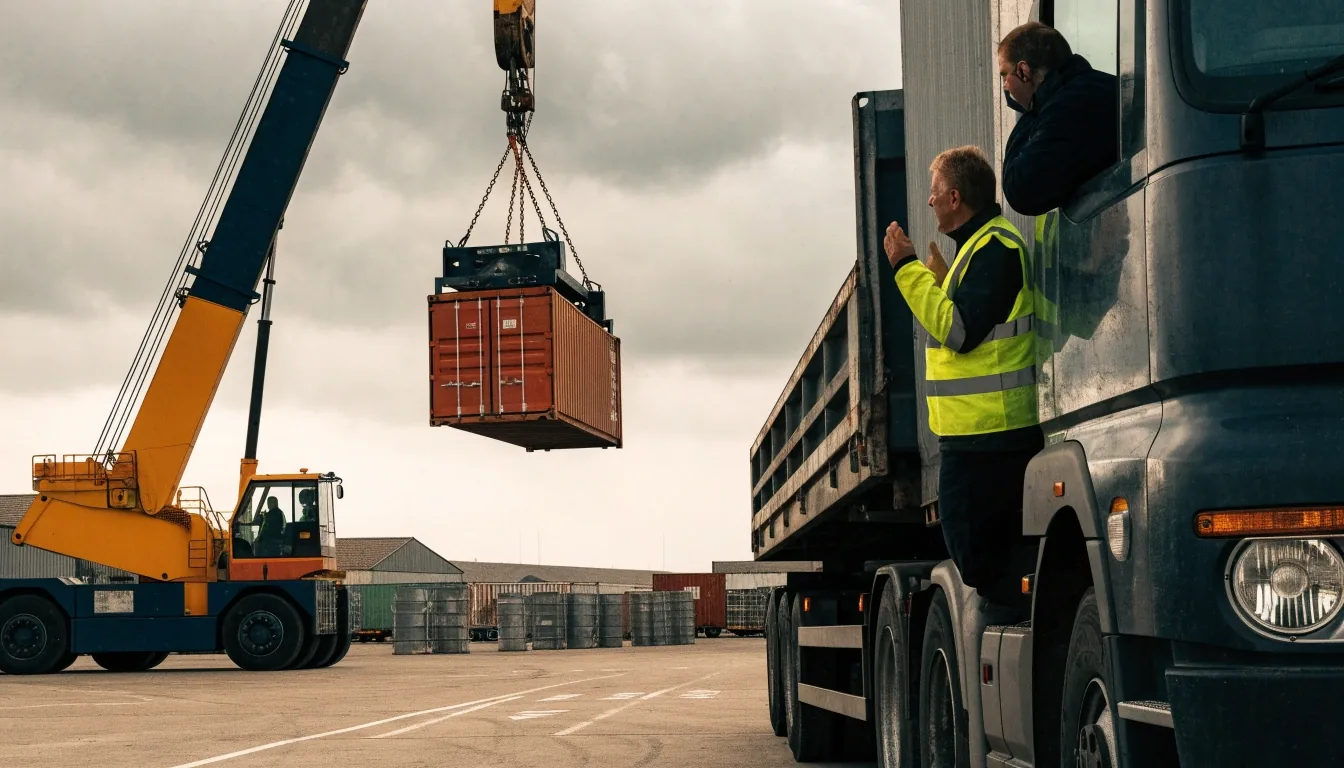
Import and export documentation, douaneformaliteiten, and Belgian regulatory checks are part of the job, not an afterthought. Belgium applies port state control under the Paris Memorandum of Understanding, and maritime transport is a federal matter handled through the Directorate-General of Maritime Transport. That framework shapes what vessels and cargo can do in Belgian waters.
We prepare the paperwork and flag what your consignment needs before it reaches the port, so clearance does not stall the move. If a document is missing, you hear it from us while there is still time to fix it.
Road, barge, or rail from the port
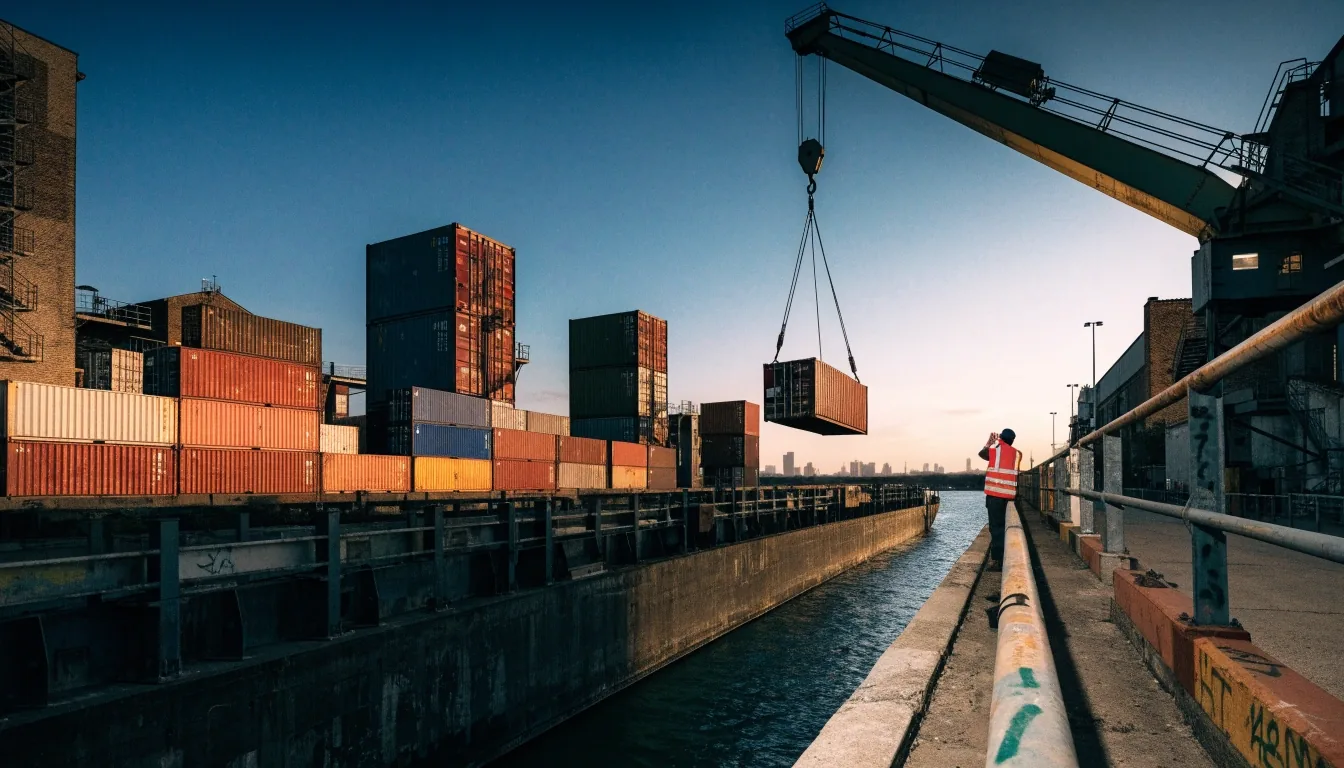
Road remains essential for first-mile and last-mile movement, and it is often the only realistic option for a short inland run. Barge suits bulk and container volumes heading to inland terminals along the waterways. Rail works for longer distances and heavier flows where a fixed schedule is acceptable.
We compare the three against your deadline and destination, then commit to one plan rather than listing options and leaving the choice to you.
Road
First and last mile, short inland runs, direct door delivery.
Barge
Bulk and container volumes to inland terminals on the waterways.
Rail
Longer distances and heavier flows on a fixed schedule.
Why Belgium as a gateway
Belgian ports sit at the heart of Europe and connect to over 800 destinations worldwide. More than 270 million tonnes of goods pass through them each year.
That density is useful if you distribute across several countries, because sea, rail, river, and road links meet in a small area. It also means congestion and scheduling need active management. A port choice that looks obvious on a map is not always the fastest route to your customer.
One region, four modes
Sea, rail, river, and road links meet inside a small area, so a change of mode does not mean a long repositioning run. That is the practical part of Belgian havenlogistiek.
Distribution across borders
Germany, France, the Netherlands, and Luxembourg sit within a day's drive of the Flemish ports, which makes a single inbound call work for several markets.
Density cuts both ways
Busy ports mean slot pressure and queueing at peak. We build in alternatives for the legs most likely to be disrupted instead of assuming the obvious port stays fast.
Port choice per cargo
Antwerp-Bruges suits container and chemical flows; Zeebrugge handles significant ro-ro and vehicle traffic. The cargo type usually decides which one we route through.
Getting started with a new shipment
Send us the cargo details, the origin and destination, and your deadline. We will come back with a route, a mode, and the documents you will need to prepare.
For recurring flows, we set up a repeatable plan so each shipment does not start from zero. There is no obligation to book after an enquiry, and we will tell you if your cargo is not a good fit for how we work.
Four details worth having ready
- Cargo dimensions, weight, and packing type
- Whether the goods need a temperature range
- Origin port or supplier, and final delivery address
- The date the cargo has to arrive
-
1
Send the details
Cargo, origin, destination, deadline. A short message or a phone call is enough to start; you do not need a full dossier on the first contact.
-
2
We check the fit
Not every consignment suits every route. If a mode or a port does not work for your cargo, we say so before quoting rather than after booking.
-
3
Route, mode, and documents
You receive a proposed routing, the transport mode for each leg, and a list of the paperwork to prepare. Customs documents are flagged here, not at the quay.
-
4
Booking and inland leg
Once you confirm, we handle the carrier booking and coordinate the inland movement to your warehouse, customer, or the next terminal.
-
5
Repeatable from the second shipment
Recurring flows get a standing plan, so volumes that shift month to month do not send the routing back to the drawing board.
Working with forwarders and digital visibility
Belgium's forwarding sector, represented by Forward Belgium, has been moving toward digital visibility and data-driven operations. Platforms that track container status and documents are now part of normal practice, not a novelty.
We keep shipment information accessible so you can see where your cargo is and what is still outstanding. If you already work with a forwarder or a tracking system, we fit around it instead of duplicating it.
What holds up over time
One-off quotes are easy. What matters is whether a routing plan still works in month six, when volumes shift or a port gets busy. We build in alternatives for the legs most likely to be disrupted and review the plan as your flows change.
Clients who ship regularly tend to get more out of this than one-time movers, because the setup cost is spread across repeat shipments. That is the honest version of how long-term value works here.
If you ship monthly
A standing routing with pre-agreed modes and documents. Changes are handled as exceptions, not as a new enquiry.
If you ship once
A single planned move with the same paperwork discipline. Useful, but you carry the setup each time rather than spreading it.
Questions we get before a first booking
Short answers to the four things importers and exporters ask most often. Anything else, call the Lochristi office or send the details through the contact page.
Which Belgian ports do you work with?
We route cargo through the Belgian port network, including Antwerp-Bruges and Zeebrugge, depending on the cargo type and destination. Antwerp-Bruges suits container and chemical flows; Zeebrugge handles significant ro-ro and vehicle traffic.
Do you handle both imports and exports?
Yes. We arrange ocean freight, forwarding, and customs documentation for cargo moving into Belgium and out of it, plus the inland leg on either side.
Can you manage temperature-controlled cargo?
Cold chain is part of what we coordinate, including the inland leg where the koelketen has to stay unbroken. Tell us the temperature range and the deadline when you enquire.
How do I get a quote?
Send the cargo details, origin, destination, and deadline through the contact page or by phone. We will reply with a route and a transport mode.
Tell us what you are shipping
Send the cargo details, the origin and destination, and your deadline. We will come back with a route, a mode, and the documents you will need to prepare. There is no obligation to book after an enquiry.
Company
Pacific Ocean Shipping & Solutions
Registered in Belgium under company number 1124863567.
Management: De Wilde Lindsay and De Groote Ellen.
Office
Raveschoot 22, 9080 Lochristi, Belgium
Monday to Friday, 9:00 AM – 6:00 PM
Visits by appointment; the interactive map lives on the contact page.